On this page5 sections
There are two ways a machine can be cheap. It can have a low purchase price, or it can have a low cost per unit of work produced. Those are different machines, and buying the first when you needed the second is the most expensive mistake in this trade.
The two costs, side by side
A machine has a capital cost, expressed sensibly as dollars per terahash, and an operating cost, driven by joules per terahash and your electricity price. Older hardware wins on the first and loses on the second, and the loss compounds every hour the machine is switched on.
Worked through: a used machine at 19 J/TH producing 190 TH/s draws about 3.6 kW. At ten cents that is roughly 3,160 dollars a year in electricity. A current machine at 11 J/TH producing 318 TH/s draws about 3.5 kW, so almost the same bill, for two thirds more output. The purchase prices are nowhere near that far apart.
Where the flip happens
The crossover is set by your power price. Cheap power favours cheap capital: if electricity costs you very little, buying more terahash for less money wins even at poor efficiency. Expensive power favours efficiency, because the operating cost dominates everything else.
The rough shape is that below about four cents a kilowatt hour, older hardware becomes genuinely competitive again, and above about eight cents it stops being viable well before it stops working. Do not take those thresholds as gospel, calculate yours from your own numbers using the breakeven power price. It takes ten minutes and it is the most valuable calculation in the whole purchase.
The machines that suit cheap power
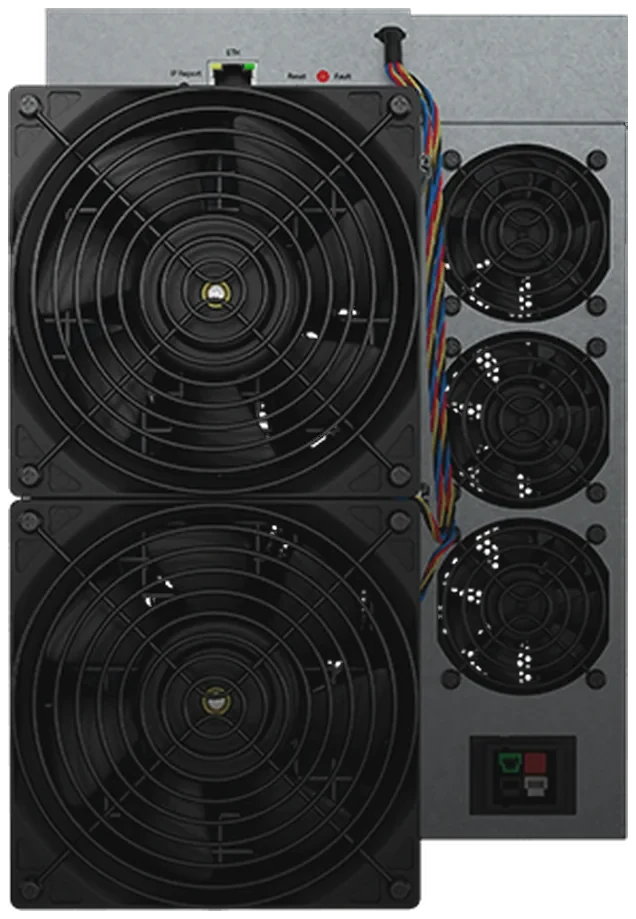
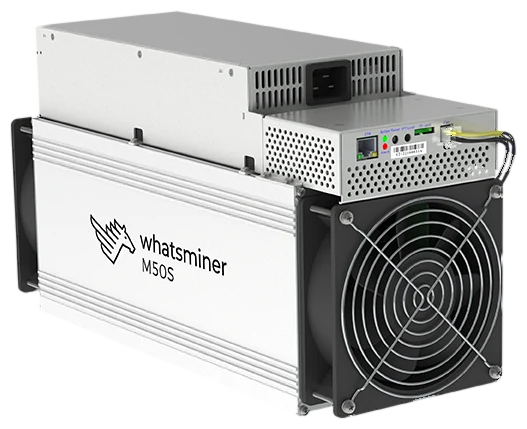
On our own list the used stock and the older generations are where this applies: the Antminer T21 at 19 J/TH and the Whatsminer M50S at 26 J/TH. Both are perfectly good machines. Both are unviable at grid rates in most of Europe, and both can be excellent behind a hydro dam, a flare stack or a curtailment contract.
Used stock also comes with the conditions that make it cheap: our minimum order is 100 units per model, the warranty is ten days dead on arrival rather than a manufacturer term, and the condition is written on the quote. That is the whole trade explained in new or used.
What people forget in the comparison
- Space and infrastructure. Reaching a given hashrate with inefficient machines takes more units, more racks, more cabling and more breaker capacity. That is real money that never appears in the price per machine.
- Failure rates and spares. Older fleets fail more and hold more capital in spares. See maintenance and spares.
- Remaining life. A cheap machine with eighteen months of viability left is not cheap if your payback model assumed three years.
- Resale. The least efficient machines fall fastest when the market turns, and they are the hardest to sell at all.
Underclocking changes the answer
A machine tuned below its default settings gets meaningfully better joules per terahash for a smaller loss of hashrate. That can move a marginal older machine back into viability on midpriced power, and it costs nothing but output. If you are buying older hardware on anything other than very cheap electricity, plan to underclock from day one. The method is in underclocking and overclocking.
Machines in this article
Run this against your own numbers
Tell us your power situation, your site and the scale you are aiming at. We come back with a hardware shortlist and a firm quote.